
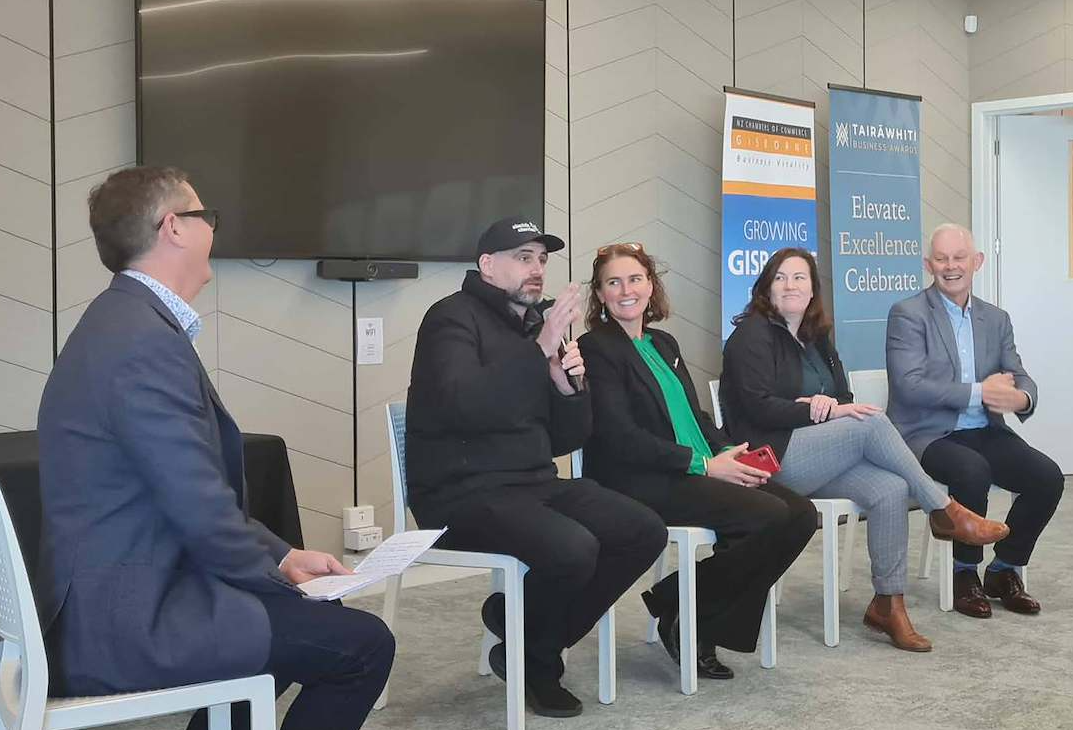
Local businesses heard how smarter energy decisions could help reduce operating costs, strengthen resilience and prepare for future change at the Electrify Tairāwhiti Business event.
Speakers from Rewiring Aotearoa, Drive Electric, EECA and Powerco explored what the energy transition means for Tairāwhiti businesses, from operating costs and investment decisions to transport, energy efficiency, new technology, network capacity and resilience.
Mike Casey from Rewiring Aotearoa discussed the economics of electrification. Using his fully electric cherry orchard as an example, he showed how solar, batteries and electric machinery can reduce ongoing costs. His presentation asked businesses to look beyond upfront prices to lifetime costs and consider a staged transition as existing equipment needs replacing.
Chair of Drive Electric, Kirsten Corson, explored the shift to electric transport and what businesses should consider when transitioning their fleets. She discussed the growing range of EVs, the importance of matching vehicles to business needs, and the need to plan charging infrastructure around vehicle use and site capacity. For Tairāwhiti, commercial vehicles, freight and rural operations were highlighted as areas where fit-for-purpose vehicles and charging will be particularly important.
A presentation from EECAs Paul Bull focused on understanding current energy use and improving efficiency before investing. He covered heat pumps, solar for farms and flexible energy use, alongside practical advice and support available to help businesses assess their energy use and future options to move away from fossil fuels.
Powerco’s Stuart Dickson shared a regional network perspective following its recent purchase of Firstlight Network. He discussed changing energy needs across Tairāwhiti and the importance of planning ahead, encouraging businesses considering major electrical upgrades, solar generation or EV charging to engage with Powerco early.
A panel discussion to close the event brought the speakers together to explore Tairāwhiti-specific opportunities and challenges. Discussions centred around resilience following Cyclone Gabrielle, local generation and batteries, network capacity, transport and future business demand. It also highlighted the value of greater regional coordination to help businesses, infrastructure and investment develop together as energy needs change.
The event was the last in a series of Trust Tairāwhiti business forums aimed at helping local businesses prepare for future change.